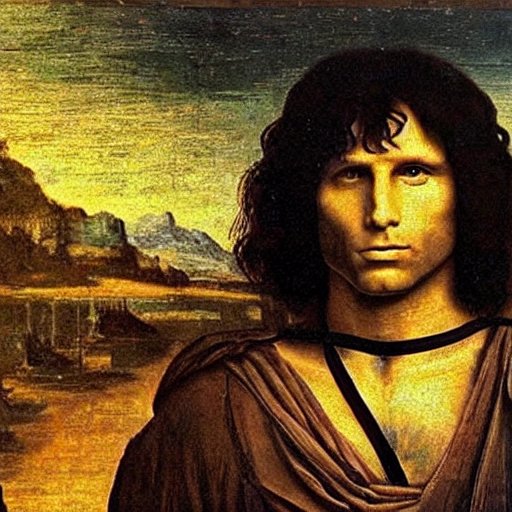
I've been watching the unbelievable advances in A.I. imagery & video, and it is completely beyond the human mind to grasp the implications of this emerging technology.
As a parent, I have endless worries about my children's safety & what they will see as they travel through this temporal experience called Life.
So, the video above really hit me when considering my kids, especially my daughter. It's based on the video If London Were Syria.
It shows a girl growing up in a dystopian future, facing existential challenges to herself & to human society, as a whole. Institutions and social structures collapse as artificial intelligence takes control of computer systems running the world. The ending (where the woman, now with her own child, is being tracked by hunter/killer robots) is such a terrifyingly real possibility- now that the field of robotics has been weaponized globally with no real checks or regulations.
The mind reels at the horrifying possibilities when watching the latest robots or drone swarms. Then, the mind absolutely recoils when faced with the realization that these powerful advancements will be controlled by the most immoral & unscrupulous among us.
Artificial Intelligence is doing something that was definitely NOT what most people would have thought the machines would be capable of - simulating & re-creating (at least visually) what people experience in psychedelic states.
This trippy application of computer software gained prominence with the "Deep Dream" programs about 10 years ago. It generated hallucinogenic animations in which barely-recognizable imagery would cycle as weird textural features.
Now, A.I. programs are just outputting the craziest, most mind-boggling imagery & video. We are breaking through to a singularity-type situation of infinite amounts of novel imagery, generated continuously. One thing I've been thinking about lately is how fusion power is developing in tandem with A.I.. Perhaps we will need a new power source to accommodate the massive amounts of clean energy that will be needed for emerging technologies in computing. It's fascinating how these interconnected innovations are evolving simultaneously.
I've posted about the possible outcomes of this paradigm-shattering technology, but I am just left in awe thinking about the implications. I don't even pretend to understand the coding & technology to produce this kind of software. It's basically Enochian magic, as far as I know. The biological human brain & society eventually won't be able to keep up with the madness that's about to ensue.
Check out this amazing A.I. alien goblin remix of the old "Techno Viking" video that had me dying:
I love the use of 3D modeling programs to re-create ancient cities & environments. It is an immersive way to virtually travel through time and experience the glory of past civilizations. Playing the Assassins Creed games always impressed me with the way you got a sense of the historical time period, such as Renaissance Rome or Ptolemaic Egypt.
It is exciting to come across projects where artists and historians accurately replicate the appearance of an ancient site. I found this website by Thomas Kole that is devoted to the rendering of Tenochtitlan, capital of the mighty (& brutal) Aztec empire, in the location that is now Mexico City:
The renderings shown on the website are stunning. The Aztec city built in the middle of a lake surrounded by mountains left the Spanish conquistadors awestruck when they first saw it. (Of course, the awe was only temporary & didn't' prevent them from subjugating and eventually destroying the magnificent city.)
It was an absolute marvel of engineering & city planning, and 3D computer renderings like this are now the only way to experience the majestic nature of this lost metropolis. I would highly encourage visiting the website above & spending some time soaking in the beauty of Tenochtitlan.
I've long been fascinated by ancient Mesoamerican cultures. I've studied the art, astronomy, engineering, and societies of the Aztec and Maya people extensively. There is so much to learn from them, but unfortunately so much has been lost to conquest and time.
That is why it is so amazing to be able to use this technology to visualize the details of the time period, especially when it is done is such a meticulous and historically accurate way. Eventually, we will be able to use these digital reconstructions and virtual or augmented reality devices to "time travel" and visit such sites in an even more immersive context.
I have been dabbling in simple A.I image generation. I created pages on Facebook & Instagram under @ac_artificial_creativity.
I've been using the online program Stable Diffusion. I actually don't like the newest version, so I found the older Stable Diffusion v1.5. It's actually faster, & generates 4 images at a time. The newer version only generates one image (which is more "polished" looking), and is much slower. The one thing I like about the older version is the glitchy & weird images it could produce.
The explosion of A.I. generated art is still blowing my mind. There is now endless novel artwork being created, & I don't think we've full grasped the implications of this technology on human creative efforts. I look through my social media feeds of all this amazing imagery, thinking it's just overwhelming.
I've also begun to use generative tools in my professional life, which is just as amazing. I couldn't find the right photo of a chocolate bar online to use for a food label, so I used A.I. to make one that I could plug into the design. On another project, I had to use a photo of a cheesecake with the end cropped off, so I used Photoshop's new "generative fill" tool & it completed the crumble crust end of the cheesecake perfectly. I just thought, "Holy shit, this is insane."
Anyway, when I first started generating A.I. images, one of the series I made that made me sit back and just feel totally awe-struck was of architectural illustrations. The prompt I used was "a futuristic organically inspired city with greenery and sleek rounded architecture". The results were so impressive & beautiful, I couldn't believe they were generated by a computer program.
I think artificial intelligence software could help advance mankind in unimaginable ways, if it's not used to make a dystopian inescapable control system first. Even before the current proliferation of these programs, I've long thought we should get rid of human politicians whose self-interest & corruption fucks us all over, and feed policy problems into A.I. for the optimal solutions that benefit the greatest number of people.
Here are some more more images depicting the potential green urban utopia that A.I. could help us to implement. I think they're absolutely fantastic:
-Images: Stable Diffusion AI Software -Prompts & Curating: Paul Micarelli
I have been tinkering with A.I. generated art, using Stable Diffusion software. I am simultaneously amazed & disturbed by the novel imagery that computers are now able to create. As an artist & graphic designer, the A.I. phenomenon makes me feel like a carriage maker at the onset of automobile manufacturing.
The software I'm using is relatively basic, but it can still produce really cool art (as well as hilariously bad formulations). I actually give the software top billing on my posts, because all I'm doing is entering prompts. Yes it's a tool just like Photoshop, but the computer & code creating the imagery is almost spooky and makes you examine the nature of consciousness itself. What we understand to be consciousness or mind is an emergent cascade of phenomena, as is machine learning. However, the ability to explain the system doesn't make it any less mysterious.
The endless amounts of objectively fantastic artwork flooding social media now is just mind-boggling. Just like the Internet itself, there is no way to understand exactly where this technology is going to take society.
I have started social media pages for the A.I. art that I'm collaborating with the machines to produce. If you're reading this, I would greatly appreciate it if you check them out & follow:
There are so many questions & issues that arise from this technology...
• What does it mean for the human artist & creator?
• Will A.I. art be required to be detected & distinguished from human art, in certain circumstances? Or will that prove impossible, and proof of process will be required to verify human-made art if desired.
• Are we entering a "post-reality" reality, where we trust absolutely nothing, and objective truth no longer exists in the digital realm?
...It's all so crazy... what the hell is happening? We'll just have to buckle in & find out!
Here are some articles I've read recently about the topic as I try to wrap my head around it all:
One emerging technology that I've been watching very closely is the use of artificial intelligence (A.I) software to create artistic imagery.
As a graphic designer, the idea of computers creating art & design comparable to humans makes me uneasy- in the same way a horse-drawn carriage maker must have felt watching automobile factories coming online. I think that the human mind will continue to have a unique place in the creative process, at least for the foreseeable future. However, I look at some of the results coming from A.I. image processing programs & I'm like fuuuuuuuuck... this is amazing.
From what I've seen, a lot of emphasis has been on the generation of fine art and illustration, creating images using descriptive keywords and style references. What worries me is the use of A.I. for design-related projects like logos, where many options can be generated in a speed & variety that no human designer can match.
I wanted to talk about this topic after seeing a post in r/damnthatsinteresting in which human evolution is "imagined" by the A.I. Stable Diffusion software.
I just stopped typing so I could mess with the program a little bit, and now I'm even more amazed & perturbed.
This image was generated when typing in the name of my blog, The Monkey Buddha:
This is so crazy to me... I mean, what the hell??? This just shows that even human creativity is just an emergent phenomenon, that can be simulated and improved upon. These technologies and A.I. applications are going to be just as revolutionary & disruptive to culture as the Internet itself was.
I'm pretty good at spotting Photoshop work, but it's going to be impossible to distinguish the source of photos & images in the near future. It will be interesting & disturbing to see this all unfold, but there's really no way to put this technology back in the box. So, we humans have to do what we do best, adapt & improvise - something it looks like computer networks are beginning to emulate.
Prompt: "computers taking my graphic design job"
In addition to the monkey at the beginning of this post, here are some more screenshots I pulled from the video above:
Finally metamorphosing into complete abstraction...
Considering that I was just looking at the constellation Orion as I brought in my trash cans from the road tonight, this is a good video to share now. I always look up at the stars, amazed by even the limited number of stellar lights that I can see in the night sky at my house.
Orion is one of the most obvious constellations, and was associated with Osiris & his resurrection in ancient Egypt. One interesting fact about this arrangement of stars is their spacial orientation, which is obviously not on a flat plane as it appears. This is a cool diagram showing their relationship in space, from the previous article:
I love computer animated videos like the one below, because they give a perspective that is almost impossible to achieve strictly through verbal descriptions, or even numbers. Nothing can give you a quality existential crisis like a well-produced 3D animation like this, since it can clearly illustrate certain truths that reveal the mind-boggling nature of our reality.
This video was produced by Epic Spaceman & shows the scale of the nebula in the 'sword' of Orion, compared to our Sun. You just think about the incomprehensible vastness of space, and the mind & ego just "poof" away like an ephemeral cloud of dust.
One of my favorite uses of computer graphics is for visualizing scientific concepts that humans cannot otherwise experience, when the scale is beyond the realm of our senses.
I have posted before about the use of 3D renderings to illustrate microbiology, and it never stops fascinating me. The workings of living organisms at the molecular and cellular scale are mind-boggling.
I recently saw this computer animation by The Vaccine Maker Project detailing how mRNA vaccines train the body's immune system to neutralize a coronavirus & thought it was a brilliant educational video.
My wife & I were hesitant at first to get the vaccine, because of concerns regarding conceiving another child. However, as a nurse she was eventually required to be vaccinated, & so I followed suit. I was never really against it, but I never got flu or other vaccines either... it was a sort of ambivalence since I am very healthy and rarely get sick. (One time as an adult, I got a bad case of the flu and felt like I was going to fucking die, & I still didn't bother getting flu vaccines even after that experience. However, I did finally get the flu shot recently after getting the COVID vaccine.) Even before we got vaccinated, we still followed all the other recommendations & protocols for preventing infection. However, having a toddler while being vulnerable to getting sick with COVID was very stressful.
After researching actual scientific papers on the mRNA vaccine process (& no, not relying on some bullshit Facebook or other website research), I understood how amazing this biotech was & felt very confident in getting vaccinated.
Watching this video gave me an even deeper appreciation- not just for this vaccine technology, but for the astounding way that our microbiology functions. The fact that these interactions are continuously playing out billions of times throughout each of our bodies, while we are completely unaware of this entire universe of living processes within us, is just an incredible & utterly incomprehensible phenomenon.
I highly recommend watching and sharing this video to educate other on how this amazing bit of biological engineering works.
BONUS:
In the recommended videos alongside the one I posted above, I also saw the following video that goes into another aspect that I was very curious about - how is the vaccine actually designed & manufactured?
This video gives a glimpse of the awesome scientific effort that goes into the production of something like the Coronavirus vaccine:
I've had some experience in 3D computer graphics, and I love to see all the amazing artwork people create in that medium.
Artist Hadi Karimi digitally sculpts likenesses of historical figures in such a realistic manner that they look like photography. Being an expert in photo retouching, I can pick out fake images easily. However, these renderings are so convincing that they appear like real people, even to me.
The artistry displayed here is absolutely astounding. As I look over these portraits again, I am baffled that someone can even do this! Not only is the sculpting of the faces impressive, but the coloring & textures, hair, clothing, and especially the lighting all lend to the realism of these images.
For each portrait, there are multiple viewing angles, again adding to the sense of dimensionality of each figure.
I would highly recommend visiting the artist's website, to marvel at the technical and creative skill shown in these 3D renderings.
I believe this is a step to digitally re-creating people of the past - both famous and of personal importance. I could see an industry of providing "virtual loved ones" that can be seen and interacted with using VR or holograms.
Technology like Deep Nostalgia, combined with this kind of realistic 3D modeling, could allow a person to choose from a library of historical figures, or the creation of an AI-generated avatar based on personal photos and video.
Maybe when my son is an old man, he will be able to generate a virtual version of me to converse with. People are inherently social and nostalgic creatures, so it would surprise me if that kind of application wasn't developed at some point in the future.
However, the compilation of the top 100 animations is almost overwhelming in the sheer talent on display. I have watched it several times already, noticing new details each time.
It is truly a visual and mental treat, & I cannot recommend enough that you just take time to watch the top 100 montage:
However, I see the various ways that artificial intelligence is increasingly being used to for creative applications and know that it is only a matter of time before there is serious competition from computer-driven solutions to literary and artistic endeavors.
Writing & literature is one area where A.I. is making noticeable progression. I came across this article that was composed using OpenAI language generator, in which a prompt is given & the computer creates text. In this case, the prompt was "Focus on why humans have nothing to fear from AI".
I started a story about my son Paul Giuseppe, & the website produced a coherent and interesting continuation of the text.
It was pretty amazing, actually, and offers a glimpse at the creative power that machine learning will contribute to culture. (I was about to write "..contribute to human culture", but I don't think culture is solely a product of the human mind anymore...)
Recently, tech entrepreneur, visionary, & hype-man Elon Musk publicly introduced the Neuralink technology - a brain-computer interface that will allow the mind to directly connect to machines.
Right now, the most promising aspect is the potential to help control artificial limbs or give paralyzed individuals a way to access electronic devices. However, Musk envisions direct mind-to-mind communication, or be jacked-in to a digital space in which the possibilities for cognitive enhancement are truly limitless.
The smartphone & portable digital devices have revolutionized our personal and social experiences, just as the development of computers did before them. This is clearly the next step in human technological evolution, whether everyone is ready for it or not.
As with any new tool or system, there are unforeseen positive and negative consequences that will arise as a result. In many ways it will advance human consciousness beyond anything we can imagine. We currently have the entire catalog of human knowledge at our fingertips, but perhaps we will be able to access it on multiple streams at the speed of thought. On the flip side, this kind of human augmentation will likely segment society in even more extreme ways than social media and other digital tech is doing today.
This article from Wired presented some good insight into what Neuralink offers now, what is possible in the future, and what difficult issues researchers face in advancing the technology.
The largest hurdle in fully realizing the potential of this technology is our limited understanding of the brain/mind itself. I am currently reading "The Fractal Brain Theory" by Wai Tsang and it is a technically immersive look into the complexities of the brain's architecture at various scales, and how they intermesh together.
I think the progression of this technology to completely integrated neural circuitry is inevitable. Although it has not fulfilled my vision of an "Apple iThink" implant that I presented over 10 years ago, the road is clearly being paved in that direction.
The video is like a medical computer animator decided to take massive amounts of psychedelics and just go nuts. Technically, the computer graphics are top-notch - which makes the surreal presentation so much more enjoyable.
I saw this article on Creative Bloq that listed some of the major events in graphic design over the last 25 years. Although I might not totally agree with their list, some of which is self-serving, it is important to look at the changes and important developments that have happened in the field.
In 1995, I had almost graduated high school, and was about to go to college for mechanical engineering. After 3 semesters, I switched majors to my main passion- art & graphic design.
Not much has fundamentally changed since I was a student. Obviously technology has advanced, but I still use a Mac computer, Adobe creative software is still the gold standard, & designing for print or web relies on the same basic principles.
The most significant thing that has changed is the proliferation of mobile devices, and the introduction of a wide variety of software and apps to make design more accessible.
What makes "good" or "bad" design is still subjective, but I think that allowing more people to express themselves creatively is always a good thing. I'm not worried about my job security as a professional designer, even if AI starts to encroach on my field!
Beeple has made a piece of computer art every single day for over a decade. The amazing thing is that it is rarely crap, & in fact, his work is usually pretty awesome. His everyday images range from sublime, to technically impressive, to completely sick & twisted. Along with Alex Grey, he is one of my favorite contemporary artists.
This video lets us see Beeple in action, and he is like an insanely talented Bill Gates with a sailor mouth.
After a several-year hiatus, I have finally gotten back into gaming. My wife got me a PS4 for Christmas because I was always talking about how cool certain games looked. I guess she felt bad that I couldn't enjoy one of my favorite pastimes anymore.
The console came bundled with a few games, but knowing what a huge Star Wars fan I am, she also got me Star Wars: Battlefront II. It was the first game I played & I was pleasantly surprised on how good it is.
I had the "original" Battlefront II for Playstation 2 and it was awesome. I can't tell you how many dozens (maybe hundreds) of hours my brother & I probably put into that game playing each other in Versus Mode over the years.
When the next-gen Battlefront II first came out, it got a bunch of bad publicity due to the publisher, EA, including loot boxes and limited content. To their credit, they've addressed a lot of the negative complaints and improved the game greatly since its release. When I first launched the game, I downloaded the latest updates which included a lot of additional free content.
I haven't ventured into the realm of online gaming, so I stick to playing the story or arcade mode- where you can play the computer or another player with a split screen. My wife grudgingly agreed to play me when I begged her to humor me... but she then kept asking me for "One more game!" because she really got into it. We just put it on "Heroes Only" so we can play as the lightsaber-wielding characters, which is more fun than using the troopers with blasters. There's nothing quite like playing as The Emperor alongside your wife playing as Darth Vader, cutting down waves of rebels like true Sith Lords.
When playing Arcade Mode, I'll sometimes use the troopers because there are so many great variations from the Star Wars movies- Jet Troopers, Clone Commandos, classic Stormtroopers, and now even Sith Troopers from Episode 9.
The space battles, where you're flying in starships, are also pretty awesome. The flight controls are a little weird at first, but with some practice they become easier to get the hang of.
In general, the graphics and sound are amazing. It really puts you into the Star Wars universe and is visually stunning, with the iconic sounds of blasters and lightsabers adding to the authenticity. While playing the story, and sometimes even during an arcade battle, I catch myself just looking all around, impressed with the settings.
I finished the Story Mode, and the additional epilogue "Resurrection". I thought it was very enjoyable overall and thought it weaved a new narrative into the existing "Star Wars" canon very well. Unfortunately, this game had a more interesting & coherent vision than the entire "Sequel" trilogy! I kept thinking, "Wow this really feels like Star Wars, but is also fresh" - from the settings, to the integration of new & familiar characters, to the story itself. The new movies, on the other hand, were a goddamn mess story-wise, and were disappointingly limited in scope & imagination.
The Battlefront story mode takes place after "Episode 6: Return of the Jedi" immediately after the destruction of the second Death Star. It follows an Imperial Special Forces commando, Iden Versio. Iden becomes disillusioned with the Empire after the death of Emperor Palpatine triggers orders for "Operation Cinder," which even targets worlds that are home to Imperial loyalists. You follow her journey as she eventually switches sides to the Rebellion/New Republic. The great thing about the game is that you also get to play as other familiar characters, including the main heroes, Luke, Leia, Han, and Lando at different points. The great thing is that the inclusion of these characters feels like a proper extension of their stories told in the original movies, and not random or shoehorned placement to give them an appearance in the game.
Overall, Battlefront II is a great game that has excellent replay value & is guaranteed fun for any Star Wars fan.
Well, it took only 10 years... but technology is finally catching up with my concept for the "iThink" Apple-branded brain/computer interface.
The Neuralink tech that is being developed by Elon Musk's company uses thread-like electrodes that are embedded into the brain using a device similar to a sewing maching. The threads are implanted directly into the brain, but not directly connected to neurons.
This concept is truly dystopian & frightening to many people, but I think it is the next logical step in the "meta-volution" of the human mind.
As much I love the natural world and feel like it is good to disconnect from the web & devices from time to time, the organic structure of the brain will soon need to be augmented beyond the external digital tools we are currently using. The rate of digital information flow and capabilities of A.I. are just advancing too quickly for biological evolution to keep up.
Some of the abilities that could result from tech like Neuralink are:
• "Telepathic" brain-to-brain communication
• Instantaneous mathematical and scientific calculation
• Access to an unlimited databank of multi-sensory media • Virtual or augmented reality that is directly experienced in the mind
• Expanded multi-dimensional consciousness beyond our current "single point" awareness
• Real-time language translation
• GPS combined with Google Maps to facilitate information-rich navigation
• Etc., etc., etc.
Yes, this technology has the potential for negative uses (mind hacking, unwanted advertising, inability to disconnect)... but ALL tools have that risk. This is the danger that sci-fi classics such as Star Trek's "Borg" and The Matrix have tried to warn us about. However, the same tools that could be extremely dangerous also have the potential to create amazing beauty & benefit for humanity.
As the late, great Timothy Leary said:
•••••••••••••••••••••••••••••••••••••••••••••••
"The level of intelligence has been tremendously increased, because people are thinking and communicating in terms of screens, and not in lettered books. Much of the real action is taking place in what is called cyberspace. People have learned how to boot up, activate, and transmit their brains.
Essentially, there’s a universe inside your brain. The number of connections possible inside your brain is limitless. And as people have learned to have more managerial and direct creative access to their brains, they have also developed matrices or networks of people that communicate electronically.
There are direct brain/computer link-ups. You can just jack yourself in and pilot your brain around in cyberspace-electronic space."
• ...and now, the folding touchscreen device is coming to the market (Galaxy Fold, Huawei Mate X)
Here is the description that accompanied my product design:
_____________________________
Omega Interactive Display
"Interactive: Omega Interactive Display is a flatscreen,
touch-sensitive LCD monitor that allows you to write, choose items,
draw, and navigate directly using the Omega stylus. Input devices such
as the mouse and drawing tablets are unnecessary with our easy to use
interface.
Compact: Our 17" display is 95% viewing area, with almost
no surrounding casing to take up space. You get a combination of sight
and sound in one compact unit with the stereo speakers embedded behind
the screen. The display also folds in half for easy transportation or
storage.
Wireless: Since the Interactive Display is powered by our
wireless electricity transmission and also has a wireless data
connection to the Omega Computer unit, there are no cords or batteries
to deal with. This means you can use it anywhere- on the sofa, in the
kitchen, or outside! If you want to stay in the office, you can attach
it back to its stand for a space-saving work area.
Multi-media: Our Interactive Display contains high-quality
6"x9" flat stereo speakers to complete the Omega multimedia experience.
Watch video, enjoy lifelike gaming, or hear crystal clear music while
computing without the burden of seperate speaker hookups!"
_____________________________
There are many technologies that I envisioned for this project that are only now being released or still under development. I'm still kind of surprised at how inventive "past me" was!
The next leap was 10 years ago, when I came up with a concept for an Apple branded brain-computer implant, which is nowhere near being available as a commercial product: